Curricula

The Center for the Improvement of Mentored Experiences in Research (CIMER) base curricula includes Entering Research, Entering Mentoring and Mentoring Up. CIMER has developed a total of 23 curricula to cover a wide range of disciplines and careers. Visit MyCIMER and create a free account to preview and download the curricula. 

*CIMER is currently in the process of updating our full curriculum library to be digitally accessible. Several of our most frequently used mentor training curricula have been updated to be screen reader accessible (see status here). Our ongoing updates now also include adjustments to font and line spacing to make them more readable. If you would like to use a version of our materials that have not been updated, or have another accessibility concern, please contact us at cimer@wcer.wisc.edu

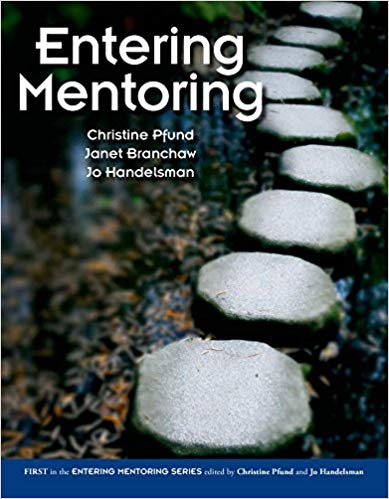
MENTOR CURRICULA: Entering Mentoring

Entering Mentoring book cover

The curricula, called Entering Mentoring, is for mentors of research trainees. It was originally developed for mentors across science, technology, engineering, mathematics, and medicine (STEMM) disciplines at different career stages, working with undergraduate and graduate students, postdoctoral fellows, and junior faculty.

Our mentor training materials are designed for those who wish to implement process-based, professional development workshops for research mentors. You may choose one of our complete, pre-assembled curriculum packages or build your own customized curriculum to meet your needs.

The Entering Mentoring curricula series addresses the new NIGMS guidelines external link regarding the preparation of mentors involved in training grants.

Themes and Concepts:

  • Aligning Expectations
  • Articulating Your Mentoring Philosophy and Plan
  • Assessing Understanding
  • Cultivating Ethical Behavior
  • Enhancing Work-Life Integration
  • Fostering Independence

View the list of learning objectives from the curriculum here external link

  • Fostering Wellbeing
  • Maintaining Effective Communication
  • Promoting Mentee Research Self-Efficacy
  • Promoting Professional Development
  • Establishing a Practice of Inclusion 
  • Enhancing Cultural Awareness*

*To access this module, please complete this application form external link
MENTEE CURRICULA: Mentoring Up

Entering Mentoring book cover
Entering research book cover

Mentoring Up is an active learning approach designed for post-doctoral scholars and junior faculty to support development of the skills needed to successfully navigate the research training environment and proactively manage their mentoring relationships. The curricula integrate topics from Entering Research and Entering Mentoring to develop mentoring up skills. These curricula were originally developed for use with trainees across the science, technology, engineering, mathematics, and medicine (STEMM) disciplines. You can read more about the training here.

These curricula address important topics and concepts in research mentoring and training by creating learning communities and engaging post-doctoral scholars and junior faculty in activities, assignments, case studies, and facilitated discussions to solve mentoring dilemmas and share successful mentoring up strategies. 

Themes and Concepts:

  • Building Research Self-Efficacy
  • Aligning Expectations
  • Maintaining Effective Communication
  • Establishing a Practice of Inclusion
  • Enhancing Work-Life Integration*
  •  Achieving Independence
  • Seeking Professional Development

*Unique to Junior Faculty Curriculum

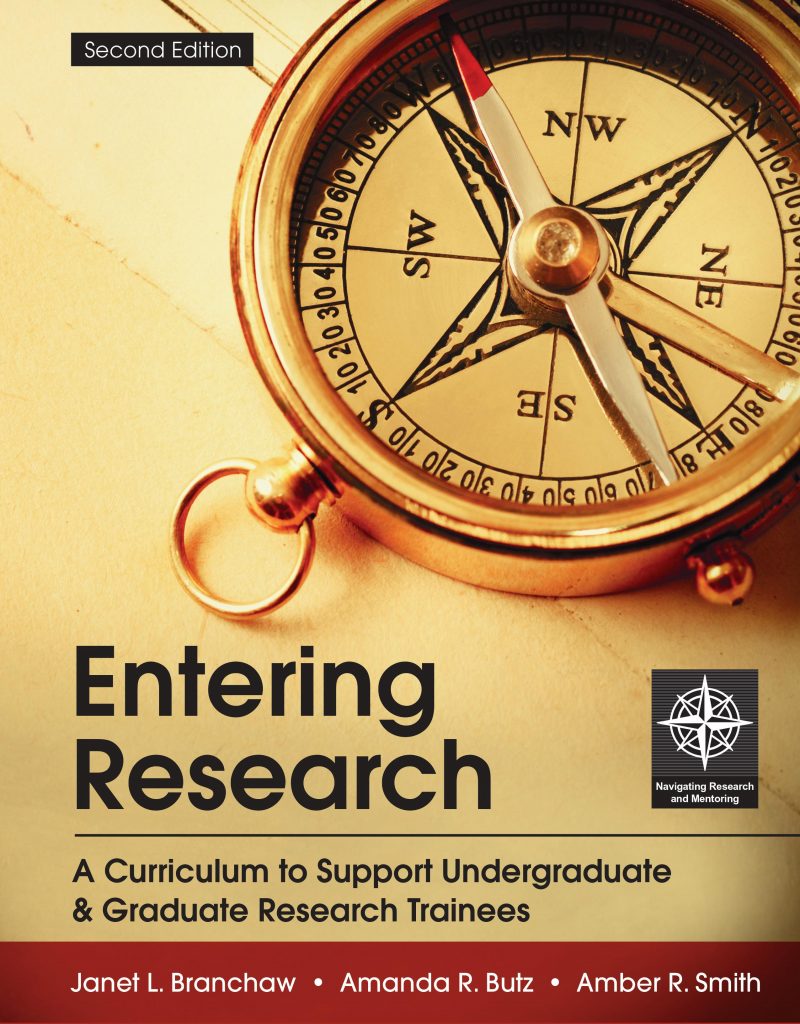
MENTEE CURRICULA: Entering Research

Entering research book cover

The Entering Research conceptual framework, curriculum and assessment resources available through CIMER were developed at the Wisconsin Institute for Science Education and Community Engagement (WISCIENCE). Please visit the WISCIENCE website external link for the most up-to-date information.

The second edition of the Entering Research curriculum (Branchaw, Butz, and Smith, 2020) is a collection of nearly 100 evidence-based activities for undergraduate and graduate research trainees that can be mixed and matched to create new customized curricula. Alternatively, individual Entering Research activities can be integrated as needed into existing curricula for research training programs and courses. The curricular activities are designed to create inclusive learning communities that structure the research experience, clarify behavioral and performance expectations, and develop the social and cultural capital trainees need to successfully navigate the research environment. Each activity is aligned to the Entering Research conceptual framework and contains trainee materials and detailed facilitator instructions to guide implementation.The curriculum was originally developed for use with trainees across science, technology, engineering, mathematics, and medical (STEMM) disciplines engaged in team-based research, and has since been updated and aligned with the Comprehensive Researcher Development Framework (Branchaw, Butz, and Ayoob 2025) for use with developing researchers across disciplines.

Themes and Concepts:
The Comprehensive Researcher Development Framework

The Comprehensive Researcher Development Framework, derived from 56 published, discipline-specific research training frameworks with validity evidence, defines eight areas of researcher development and 79 researcher learning outcomes.

1. Foundational Disciplinary Knowledge (KNOWLEDGE)

Understand historical and emerging disciplinary content, concepts, frameworks, and theories and how they relate to other disciplines.

Example Knowledge Learning Objectives:

  • Know the fundamental content in their discipline (e.g., frameworks, theories, and models).
  • Ground hypotheses and research questions in established disciplinary knowledge, theories, frameworks, or observations
  • Know inferences and implications of research findings.

2. Practical and Cognitive Research Skills (SKILLS)

Know and apply disciplinary knowledge, technical, and reasoning skills to conduct research that advances knowledge in the discipline. 

Example Skills Learning Objectives:

  • Identify gaps in existing knowledge or research results to investigate.
  • Follow standard protocols to collect and store research data.
  • Formulate hypotheses and research questions that can be systematically tested or investigated.

3. Ethical and Responsible Research Practices (ETHICS)

Follow guidelines for responsible conduct of research and recognize and respond to ethical issues that impact and emerge from conducting research.

Example Ethics Learning Objectives:

  • Follow disciplinary data ownership and stewardship practices.
  • Act to increase access to research for all.

4. Research Communications Skills (COMMUNICATION)

Translate and communicate research ideas and findings in multiple formats to multiple audiences.

Example COMMUNICATION Learning Objectives

  • Construct appropriate ways to present and visualize data.Use disciplinary conventions to communicate research (e.g., ideas, results, implications) orally and in writing.

5. Interpersonal Research Skills (INTERPERSONAL)

Build relationships and skills to productively interact and collaborate with people from diverse backgrounds and perspectives in the research environment.

Example INTERPERSONAL Learning Objectives:

  • Understand and conduct themselves in accordance with the cultural and social norms of professionals in the discipline.
  • Express respect for others’ differences. 
  • Make meaningful contributions to collaborative research projects. 

6. Researcher Self-Beliefs and Attitudes (MINDSET)

Develop personal qualities (i.e., curiosity, confidence, identity, self-regulation, self-assessment and perseverance) that are critical for long-term success in research.

Example MINDSET Learning Objectives:

  • Persevere when problems or challenges arise in research (e.g., unexpected, ambiguous, or uncertain results, failed projects).  
  • Develop confidence in their capability to successfully conduct research.
  • Engage in practices that support work-life balance (e.g., time management, pursuing interests beyond research).

7. Knowledge and Skills to Pursue a Research or Research-Related Career (CAREER)

Apply and translate knowledge and skills as a researcher to identify and pursue a research or research-related career. 

Example CAREER Learning Objectives:

  • Identify and clarify a long-term strategic vision for their research career.
  • Translate and apply their research skills and knowledge across career pathways. 

8. Knowledge and Skills to Administer and Manage Research Projects and Teams (LEADERSHIP)

Develop administrative skills to lead research personnel and projects.

Example Leadership Learning Objectives:

  • Identify and clarify a long-term strategic vision for their research career.
  • Identify and clarify a long-term strategic vision for a program of research.
  • Mentor other developing researchers using best practices in mentoring.

MENTOR CURRICULA: Culturally Aware Mentoring

Culturally Aware Mentoring Logo

Research shows that culturally heterogeneous teams outperform and out-innovate culturally homogenous teams, and lead to better science. But addressing cultural heterogeneity can be daunting. In recent times, we have been confronted with the difficulties of racial discussions and the legacy of racism in our institutions. Research is not insulated from these dynamics. This CIMER CAM workshop is one effort to increase effective mentorship toward advancing inclusive excellence in science (Byars-Winston et al., 2018; Byars-Winston et al., 2026).external link Although there are many aspects to cultural diversity, the CIMER CAM workshop focuses on race within the US. Extrapolations can easily be made to other aspects of our identities. You can read more about the training here. external link

Themes and Concepts:

  • Identify how cultural beliefs, worldviews and identities influence. mentoring practices
  • Recognize how cultural diversity can impact, complicate, and benefit research mentoring relationshipps.
  • Acknowledge the impact of conscious and unconscious assumptions, privilege, stereotype threat, and biases on the mentor-mentee relationship.
  • Apply evidence-based strategies using case studies to reduce and counteract the impact of biases, stereotype threat, and privilege to foster trusting, culturally responsive mentoring relationships.

Learning Assessment:
The Entering Research Learning Assessment (ERLA)

The Entering Research Learning Assessment (ERLA) external link was developed to align with the Entering Research conceptual framework. It expands upon the scope of previous undergraduate research assessment tools and includes two surveys, a trainee self-assessment of learning gains and mentor assessment of trainee learning gains. The parallel surveys measure learning across the seven areas of trainee development and can be used with both undergraduate and graduate trainees and their mentors. Evidence of validity has been published for the entire instrument and for the seven individual scales for each of the areas of trainee development. Mentor and mentee survey results can be aligned and compared to understand how mentors and mentees agree (or not) on their assessment of the mentee’s learning gains. See Butz and Branchaw (2020) external link for evidence of content validity, internal structure validity (confirmatory factor analysis and factor loadings), convergent validity, and internal consistency of the instruments.

The ERLA, along with other research experience assessment and implementation evaluation tools, is available in the Entering Research book. In addition, trained facilitators of Entering Research and our research collaborators are eligible to access online versions of these instruments and aggregate reports of their data free of charge.

Collaborate With Us

To inquire about Entering Research collaboration opportunities, please contact enteringresearch@education.wisc.edu.